Most people finish Senna carrying questions the film had no room to answer. A hundred minutes covers ten years of a career, so a lot gets compressed, and the credits roll while you’re still sitting with it.
With so much Ayrton Senna content out there to choose from, pick the thread that left you with the biggest question, and start there. The driving itself, the rivalry with Alain Prost, the man away from the circuit, the era he raced in, or the education work in Brazil that still carries his name.
Start with his races, because footage explains him faster than any book can. Then choose a direction. None of it needs prior knowledge, so this works whether you’ve followed Formula 1 for twenty years or plan to start next season.
First, Which Senna Did You Watch?
Asif Kapadia’s Senna (2010)
This is the archival documentary. There’s no presenter, and nobody talks to camera. Kapadia and writer Manish Pandey built it entirely from period race footage, home video and drivers’ briefing tapes, with interview audio laid over the top. It runs about 100 minutes, follows Senna’s career from his 1984 debut to 1994, and was produced by Working Title. It won BAFTAs for documentary and for editing.
You’ll see it dated 2010, but its festival premiere came at Sundance in January 2011, where it took the World Cinema Audience Award for Documentary. If you saw it in a cinema, you probably remember the room as much as the film. Screenings ended in applause, and plenty of people cried through the last reel. See it on a big screen if you get the chance, because the in-car footage was shot for television and looks very different blown up. Some of the quietest scenes do the most work, like the conversation with Ron Dennis in the McLaren garage, filmed from a distance.
Netflix’s Senna (2024)
Netflix calls this a limited series, not a documentary. Six dramatised episodes with a mostly Brazilian cast, released on 29 November 2024. Gabriel Leone plays Senna from the Formula Ford years onward, so there’s far more room for his childhood, his move to England and his relationships. Unlike the documentary, it can stage scenes that were never filmed, and some of what you watch is composite. One TV journalist is invented outright to carry the narration.
The Quickest Way to Understand Senna is to Watch Him Race
Books can tell you he was fast. Footage shows you what fast meant in 1988, when a qualifying lap in a turbo car looked less like driving and more like wrestling. Watch three or four races in full and the parts the film compresses start to make sense. Formula 1’s archive and Hall of Fame retrospectives are the reliable place to look, though availability differs by country.
Five Ayrton Senna Races to Watch Next
- Monaco 1984, the arrival. His first season, in a Toleman nobody expected anything from. It rained, he started 13th, and he was second and closing on Prost when the race was stopped early. Watch how little he corrects the car. This is the race that made teams start ringing his manager.
- Suzuka 1988, the first championship. Senna and Prost were teammates in the McLaren-Honda MP4/4, so the title was only going one of two ways. Senna nearly stalled off the line, dropped to 14th, then came back through the field to win it. Only a driver’s best eleven results counted that year, which is why the arithmetic mattered as much as the racing.
- Brazil 1991, winning at home. Seven years of trying, in front of a crowd that had waited every one of them with him. His gearbox failed on a lap in the 50s, leaving him stuck in sixth, and he held it there through corners no car should take in sixth, as rain arrived and Patrese closed in behind. He crossed the line, and his body simply gave out, cramping everywhere, dehydrated, drained past empty. He couldn’t lift himself from the car. They had to pull him out and hold him up on the podium, where he raised the trophy with one arm because the other wouldn’t answer. Watch it for what he was willing to spend.
- Monaco 1992, holding off Mansell. Nigel Mansell’s Williams was quicker everywhere. He led, stopped late with a problem, and rejoined behind Senna with a few laps left and a big speed advantage. He never got through. Monaco is about track position, and this race proves it.
- Donington 1993, the lap of the gods. The European Grand Prix at Donington Park: cold, wet, changeable, and an opening lap where Senna went from fifth to first past four cars. Formula 1’s own lists of the greatest laps still include it. Watch the full race and not just the clip, because he kept getting tyre calls right while others got them wrong.
One more suggestion. Watch Suzuka 1989 and 1990 as a pair. Those two collisions decided two championships, and people still argue about the blame in each. Take either on its own, and you get a hero and a villain, and the truth is messier. You’ll struggle to find a neutral account of either race, so read one from each side, and you be the judge.
After the infamous race weekend at Imola, Formula 1 changed itself. The FIA overhauled safety at a pace it had never moved at before, with cockpit sides raised, tracks redesigned, the whole culture around driver protection rebuilt from the ground up. Nearly every driver walking away from serious crashes in the decades since traces back to what got fixed because of that weekend. That response is the part worth understanding.
Choose Your Next Senna Deep Dive
|
What you want more of |
Where to go next |
|
Footage and interviews |
Formula 1’s archive and Hall of Fame profile. Started with Netflix? Watch the 2010 documentary next |
|
The Prost rivalry |
Prost’s own accounts, and race reports written in 1988–1990 rather than summaries written since |
|
His full life story |
A biography covering karting, Formula Ford, F3, his family and his faith |
|
The danger of the era |
Formula 1 safety before and after 1994, checked against FIA sources |
|
Brazil and the legacy |
His official career timeline, and the Ayrton Senna Institute’s education reporting |
What the Documentary Doesn’t Have Time to Show
His career before Formula 1. He was karting competitively from 1973 and spent years in Formula Ford and British Formula 3 in England, including a first marriage that didn’t survive the move. It also corrects a common assumption: he wasn’t racing his way out of poverty. The Senna family ran successful businesses in São Paulo and could fund a European season, which is part of why the chance existed at all. He never traded on it either. “I have no idols. I admire work, dedication and competence.”
The years outside McLaren. The film’s centre of gravity is McLaren, so it’s easy to leave thinking that was the whole career. Toleman gave him his first seat. Lotus gave him his first win, at a soaking Estoril in 1985, and three seasons in a quick, unreliable car. Williams was the difficult final chapter, in a 1994 car stripped of the active suspension it had been designed around.
His faith, and what it did to the driving. The film lets you hear it in passing. It ran through everything. He prayed before races, spoke openly about God and purpose, and described being pulled by something outside himself. “The main thing is to believe in yourself.” Whether or not you share the belief, you can’t explain the driving without it. It’s why he kept going into gaps other drivers left alone.
How complicated the rivalry was. Prost shaped Senna’s career as much as any team did: a four-time world champion, ruthlessly complete, and the only driver who could reliably make Senna doubt an outcome. Some of what looks like the establishment closing ranks was a sport that found his refusal to yield genuinely alarming, and he never pretended otherwise. “I am very aggressive and ambitious.” The two also made peace, and Prost was a pallbearer at his funeral. Any version of this story where Prost is simply the villain misses what made the rivalry worth watching.
That a documentary is still storytelling. Archival footage doesn’t remove the editing. Kapadia chose which briefings to include and where to cut. The film isn’t inaccurate, but it’s one account, and you’ll understand him better with two or three.
Why His Legacy Goes Beyond Racing
A national figure in Brazil
The yellow helmet carried the colours of the Brazilian flag, and he waved that flag on slowdown laps deliberately. “I carry my country with me.” He was winning through the late 1980s while Brazil dealt with hyperinflation, poverty and an unsteady young democracy, which is why the passion around him ran well past sport. His death in May 1994 was treated as a national tragedy and the country declared three days of mourning. Brazilians still talk about him as a national figure first and a Formula 1 champion second, and the numbers are the smaller part of it: 161 starts, 41 wins, 65 poles, 80 podiums, and world championships in 1988, 1990 and 1991.
The Ayrton Senna Institute
Senna had told his sister Viviane he wanted to do something for Brazilian children. She set up the Ayrton Senna Institute later in 1994, and it has worked on education across Brazil ever since, concentrating on public schooling and not motorsport. It’s the part of his life that lives on in the most tangible way, and reading about it tells you something no race footage can.
How the official Senna Shop fits in
The official Ayrton Senna Shop is licensed by the Senna family, and purchases support the Institute’s education projects. That’s a practical reason to buy official instead of unlicensed memorabilia, and it’s the difference between owning a souvenir and putting something back where he wanted it to go.
Find the part of his story you want to carry forward
Six ranges, each built around a different part of him.
|
What stayed with you |
Collection |
|
His career as a whole |
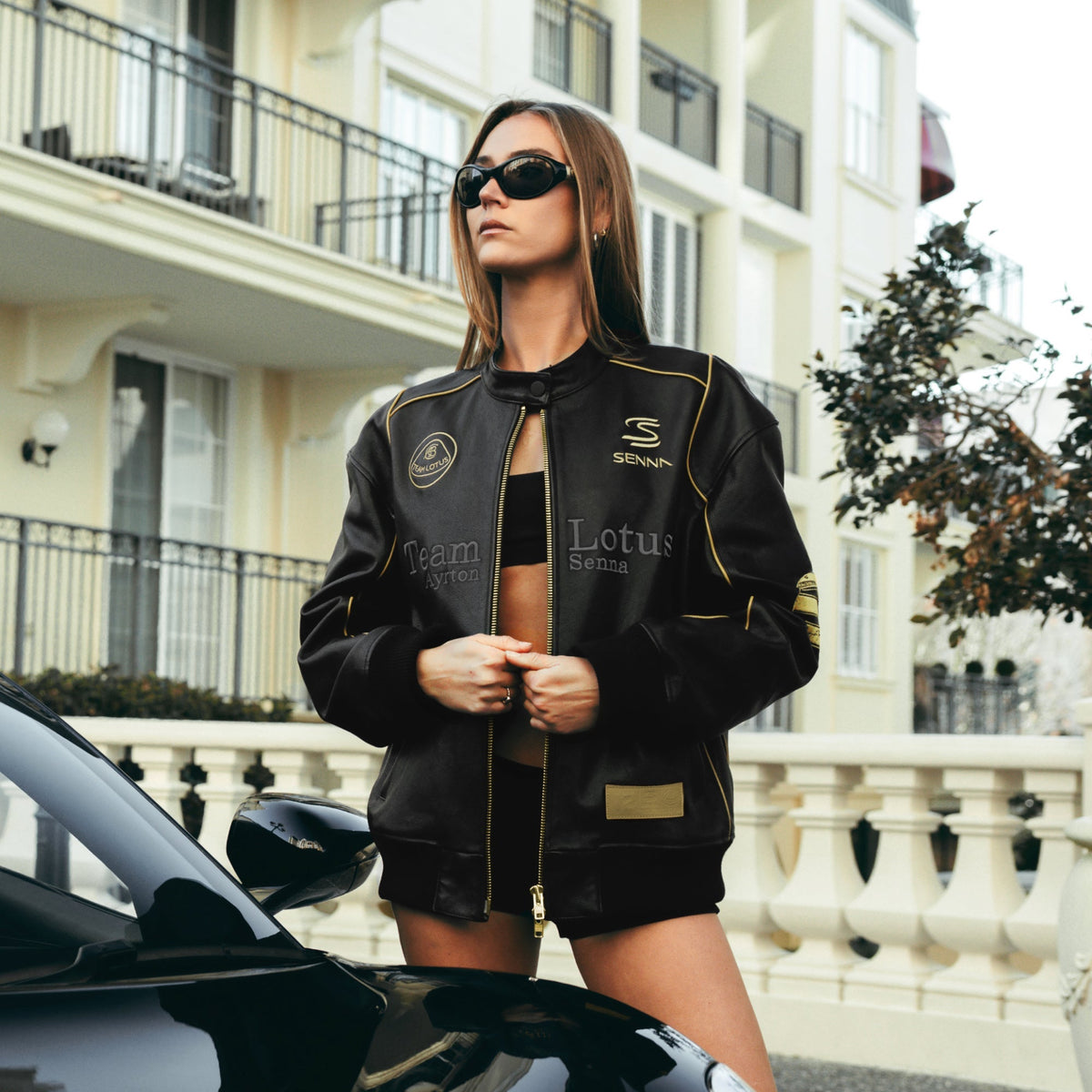
Legacy — helmet stripes and career-spanning design. The symbols that defined a career. |
|
The driving itself |
Race — motorsport graphics and circuit references. No margin. No compromise. |
|
His connection with Brazil |
Brazil — national colours, worn the way he wore them. "I carry my country with me." |
|
The look and the symbolism |
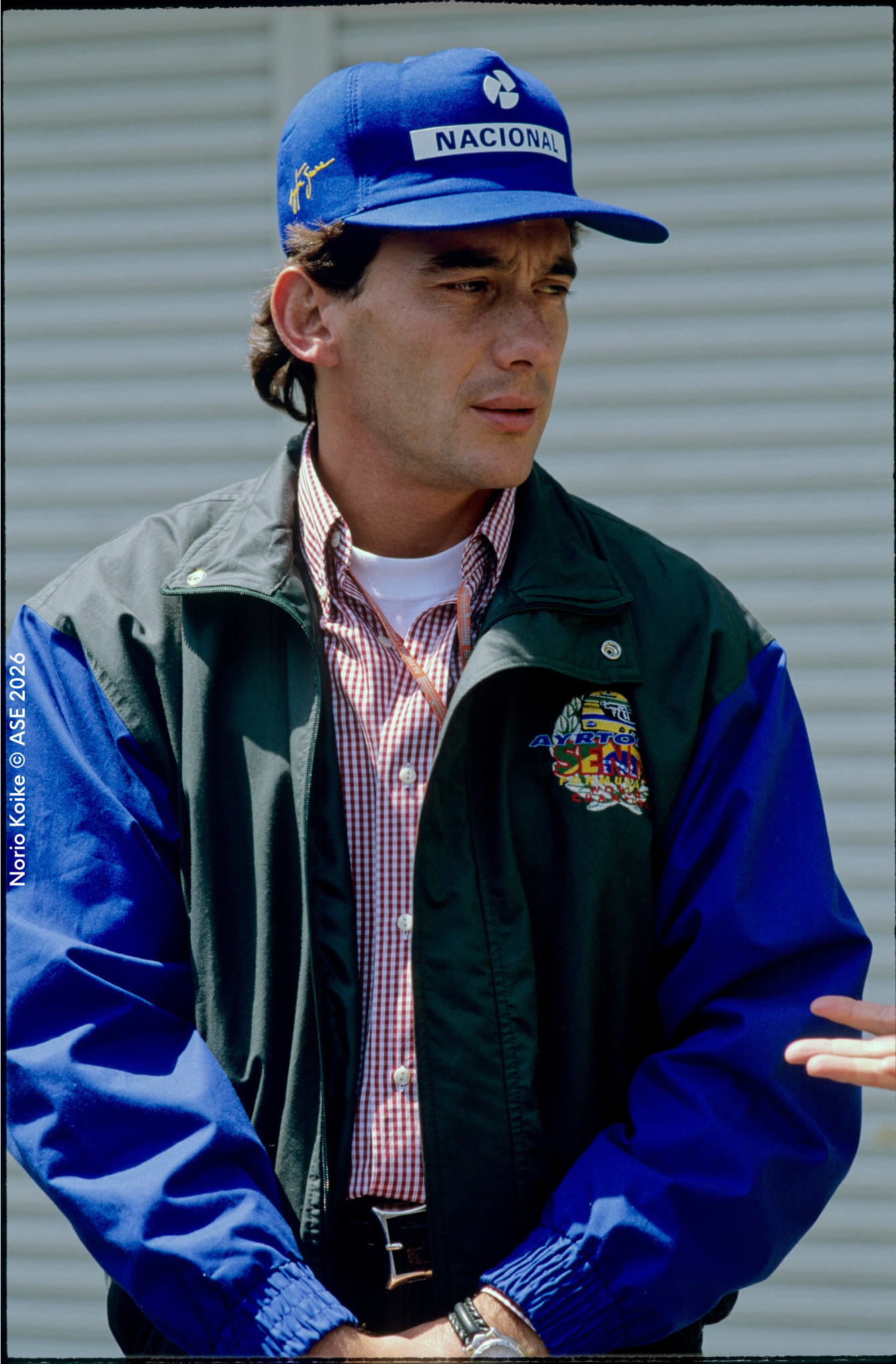
Nacional — the cap he wore off the track. Where belief became visible. |
|
The man behind the driver |
Signature — built on his autograph. |
|
Sharing it with your kids |
Senninha — the character created in his likeness for Brazilian children. For the next generation of believers. |
Everything in the range is made to be worn and not filed away, which is the whole point. The Nacional cap works as well with a jacket on a Tuesday as it did on a podium. The Legacy tee sits under anything. Most people who start with one piece end up building around it, so if you’re choosing your first, pick the cap or the tee and complete the look from there. Every detail is there for a reason.
Your Next-Step Plan
Twenty minutes: official highlights from Monaco 1984 or Donington 1993, then his Formula 1 driver profile.
An evening: one race in full, then two accounts of Suzuka 1989 that disagree with each other.
The long version: the major races in order, a full biography, the Institute’s work, and current Formula 1 with the history behind it.
Common Questions
Is the Senna documentary a true story? The footage is real and unstaged, but documentaries still select and arrange events, and this one tells the story from Senna’s side.
What should I watch after the Senna documentary? Monaco 1984, Brazil 1991 and Donington 1993 first, then Suzuka 1989 and 1990 together.
Is the Netflix Senna series a documentary? No. Netflix calls it a dramatised limited series. The 2010 Kapadia film is the documentary.
Do I need to understand Formula 1 to enjoy his races? Not at all. Monaco 1984 and Donington 1993 are gripping whether or not you recognise another name on the grid. He drove in an era with almost no driver aids, and that reads clearly on screen.
Where to Go From Here
Finishing the documentary is a starting point. Watch the races, because that’s where the reputation came from. Read something that disagrees with the film, particularly about Prost. Look up what it skipped (most of what happened before 1988), and make sure to spend ten minutes on the Institute, because the education work in Brazil is still going.
Then, if you want something to keep, choose it because it means something to you.
Driven by belief. Worn with purpose.
Explore all official Senna merchandise. Every purchase supports the Ayrton Senna Institute’s education work in Brazil.