Ask anyone to picture Ayrton Senna, and the first thing they see is usually a colour. Bright yellow, with blue and green stripes rising from the visor. That famous helmet is still the most recognisable design Formula 1 has produced, more than thirty years after he last wore it. Here is how a piece of racing kit became a cultural symbol, why Senna’s helmet became an icon, and why it still means what it always did.
The Design That Said Everything Before He Said a Word
A Deliberate Statement of National Identity
The yellow and green were not an accident. They are Brazil’s national colours, and in the 1980s, when Formula 1 was run by European teams and funded by European money, a Brazilian winning at the front in his country’s colours made a point, whether he meant to or not.

Senna meant to. He never hid that he was racing for Brazil, and the higher he climbed, the more clearly he carried it. The helmet was the most visible thing he owned, so painting it in his country’s colours was a bold statement that put Brazil on every lap, against rivals like Alain Prost at McLaren and Nigel Mansell at Williams, who carried their own national identities into the same fight. Even his compatriot Rubens Barrichello, who came up behind him, grew up with that yellow helmet as the image to chase.
The design itself came from karting. For the 1979 Karting World Championship in Estoril, the Brazilian team needed matching helmets. The job went to São Paulo’s best-known helmet painter, Cloacyr Sidney Fly, known to everyone as Sid Mosca, who designed and painted them in about five days. He made the base yellow because it stood for Brazilian sport and showed up well at speed. He drew the green stripes and the blue band coming out of the driver’s eyeline to suggest focus. Senna liked it enough to ask to keep it for himself, and he never changed it.
So was the design a planned statement of national pride, or just the livery a kart team happened to wear? It was both. The colours started as something practical. What made them a statement was the man wearing them and his refusal to change the design for the rest of his life.
The Nacional Sponsor: More Than a Logo
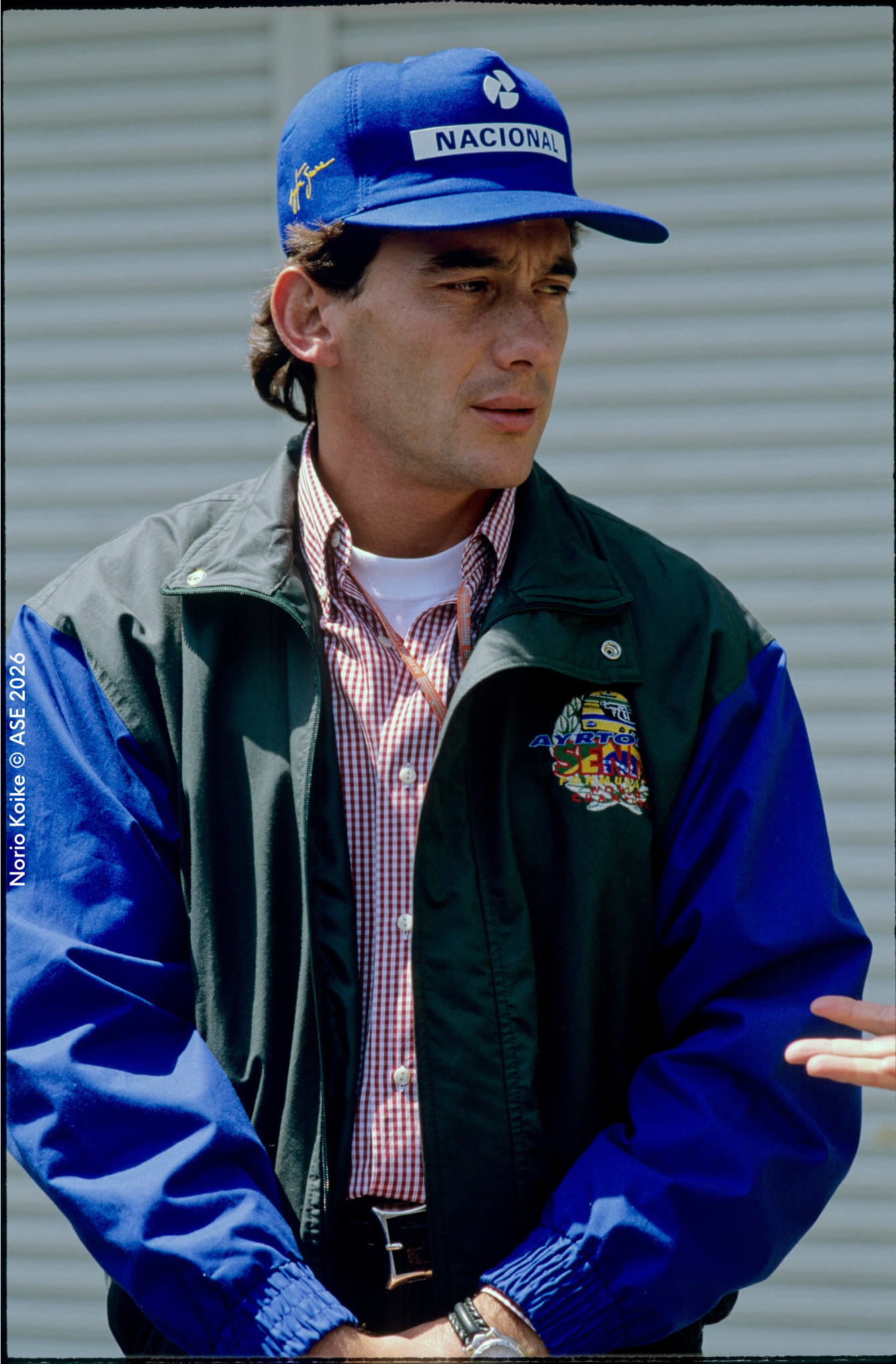
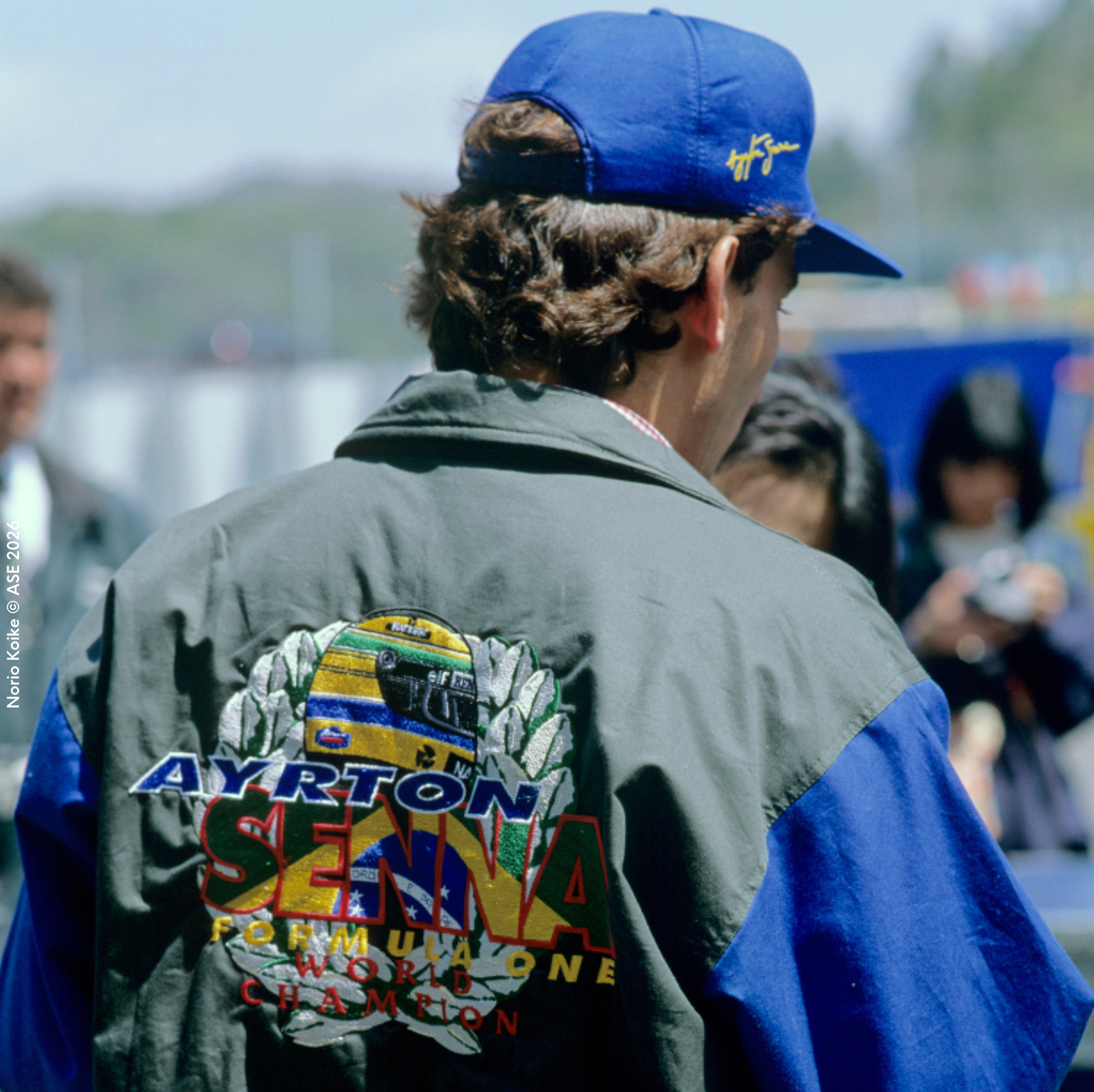
There is another word in every photo: Nacional. Banco Nacional was one of Brazil’s biggest banks, and it backed Senna through most of his Formula 1 career, up to 1994.
Carrying a Brazilian bank’s name, in a sport where nearly every other logo belonged to a European or global corporation, was its own kind of patriotism. This was Brazilian money and a Brazilian name on the helmet of Brazil’s biggest sporting export, at a time when the country’s economy was under real strain. The blue Nacional cap he wore on the podium became almost as recognisable as the helmet. That is why the 1984 Nacional Original Cap is a real collector’s piece today, not a novelty.
The Symbolism Embedded in Every Curve
Colour Psychology and National Pride
Take away the racing, and the colours still work. Yellow, closer to gold in the flag it comes from, reads as energy and optimism, and it is the colour the eye catches first, which is exactly why Mosca picked it for a helmet that had to be spotted at speed. Green reads as nature and renewal. The blue band sits underneath, the darker note that grounds the other two. Together, they are Brazil, but they are also good visual design: a helmet built to be seen.
Plenty of Brazilian athletes wore the national colours. What set Senna apart was consistency. He did not treat the colours as a costume to swap each season. He wore the same scheme, almost unchanged, from his karting days in the late 1970s to his last race in 1994. Run that at the front of the field race after race and his colour became a signature.
The Spiritual Dimension
Senna was a devout Catholic, and his faith was not something he kept away from the track. He spoke openly about feeling close to God when he drove, and he put his ability to stay calm under enormous pressure down to that belief. For Senna, racing was not separate from faith. It was one of the ways he expressed it. He is widely regarded as one of the greatest drivers in history, a three-time world champion whose championships came through an illustrious career of total commitment, and that same pursuit of perfection ran through how he saw the sport. He won that third title at the peak of his powers, and his battles in Italy, Monaco, and beyond built the reputation the helmet now carries.
You cannot fully separate that from the helmet, because the helmet was what he put on at the point where all of it met: his skill, his nerve, and his convictions. It was there in the rain at a Grand Prix like Monaco, where his control set him apart from the field. Reading it only as a paint job misses what it was for him. It was part of how he prepared to do something dangerous with a clear mind. That same faith drove his quiet giving to children in Brazil, which later became the Instituto Ayrton Senna. The colours stood for his country. The man inside the helmet was carrying more than national pride.
Why the Design Has Endured for 30+ Years

Simplicity as a Design Principle
Helmets became mandatory in Formula 1 in 1952, and for decades after that, most drivers used only two or three colours in plain designs. By the 1980s, as helmets grew and manufacturers like Bell gave designers more to work with, drivers began turning them into personal signatures. Senna’s yellow, Nelson Piquet’s red teardrop, Mansell’s Union Jack arrow: this was the era when the helmet became the driver’s face. Senna’s own design started life on a Lotus, stayed with him at McLaren and Williams, and became such a benchmark that later drivers, Lewis Hamilton among them, have run tribute versions of it. That is the mark of a true legend: the design outlived the era that made it.
Gradients, sponsor clutter, and fine detail that look great in a studio render turn to noise at racing speed. Senna’s helmet made the opposite case. A yellow base, two stripes, a bit of white linework, and that is most of it. That is why it lasts. A simple, bold mark survives distance, motion, and time. It still works on a visor, a beach towel, a phone case, or a t-shirt today without losing anything. Busy designs say nothing from twenty metres away, Senna’s helmet said one thing clearly and never stopped.
The Netflix Effect and a New Generation
In 2024, Netflix released its dramatised Senna limited series, one of its more ambitious productions from Latin America, and it was well received. For many viewers, it was their first proper look at him.
It is worth being clear about what the series did. Senna’s legacy was not asleep waiting to be woken up. A global platform backing a series this big is proof that the legacy was already strong. What the series did was widen the door. A younger, global audience met Senna, and for many fans, the helmet was the first thing they recognised, before they knew the races or the rivalries. Those colours found their way into the whole story. The job the helmet did in 1988, announcing him at a glance, it now does for people meeting him for the first time.
The Helmet in Merchandise and Collectibles
Motorsport has always turned great liveries into wearable items. A strong racing design is part of a brand’s graphic identity, and it works on fabric as well as on carbon fibre.
Senna’s visual language runs through a single clear thread, and it is one of the better details in his story. The Double S motif behind the Senna brand and the 2026 Legacy Collection comes from the layout of the Interlagos circuit in São Paulo, his home track, with its two long curves drawn into a single mark. That is a direct line from a real place to a piece of design to something you can own. It is the same language running through the Helmet Tee, Helmet Hoodie, Helmet Sweatshirt and Helmet Polo. A Senna-inspired helmet design on a piece of clothing is not a logo stamped on a blank, but the identity the helmet carried, continued on purpose. The colours are timeless, which is why a quiet tribute to them still reads clearly today.
Wear the colours that meant everything.
What the Helmet Really Meant Then and What It Means Now
The helmet was never just a design; it was a declaration. It told the world where Senna was from, what he believed in, and what he stood for, right down to his refusal to ever change it.
None of that has aged. The colours still mean what they meant. The mark is still instantly his. Thirty years on, a yellow helmet with green and blue stripes still says Senna faster than his name does.
Don’t Just Wear a Logo, Wear a Legacy

There are a lot of Senna-branded products out there, and they do not all mean the same thing. A generic image on a shirt is a logo. A piece built around the helmet's real visual language, made under official licence, is closer to what the helmet was: something worn with intention.
What collectors and serious fans care about is authenticity. Senna Shop is the official Senna family-licensed global merchandise partner. It is the difference between an item connected to the legacy and an item borrowing its image. Every purchase from the official collection supports the Ayrton Senna Institute, which funds education for children and young people across Brazil. The helmet stood for national pride. The Institute turns that pride into something lasting.
Every purchase supports the Senna Institute, keeping its mission alive in Brazil.
Frequently Asked Questions
What do the colours on Ayrton Senna’s helmet represent?
The yellow, green, and blue come from Brazil’s national colours. The yellow base reflected Brazilian sport and was chosen partly because it is easy to see at speed. The green and blue stripes were drawn to rise from the driver’s eyeline, suggesting focus. Above all, the scheme stood for Senna’s Brazilian identity, which he carried throughout his career.
Why did Senna always wear yellow and green?
The design came from a 1979 karting helmet painted by Brazilian artist Sid Mosca. Senna liked it so much that he kept it almost unchanged for the rest of his career. That consistency was the point. By never altering the colours, he turned them into a personal signature that people recognised anywhere in the world.
What was the Nacional logo on Senna’s helmet?
Nacional was Banco Nacional, a major Brazilian bank and one of Senna’s most significant career sponsors, up to 1994. Carrying a Brazilian institution’s name in a sport dominated by European brands was a quiet point of national pride, and the blue Nacional cap he wore on podiums became iconic in its own right.
Is there official Ayrton Senna helmet merchandise available?
Yes. Senna Shop is the official Senna family-licensed global merchandise partner. It offers helmet-inspired apparel, including the Helmet Tee, Helmet Hoodie, and Helmet Polo, as well as the Nacional Cap collection. Official licensing is what separates authentic pieces from generic prints.
What is the Senna Double S logo inspired by?
The Double S motif comes from the layout of the Interlagos circuit in São Paulo, Senna’s home track. Its sweeping curves are drawn into the mark that runs through the Senna brand and the 2026 Legacy Collection, creating a direct design thread from the racetrack to the merchandise.
How did the Netflix series affect interest in Senna merchandise?
The 2024 Netflix limited series introduced Senna to a large new global audience. It did not revive a dormant legacy, since the series itself shows that the legacy was already strong. What it did was widen the door, and for many first-time fans, the helmet became the recognisable entry point to his story, driving fresh interest in authentic memorabilia and apparel.
The helmet was a declaration. So is what you wear.