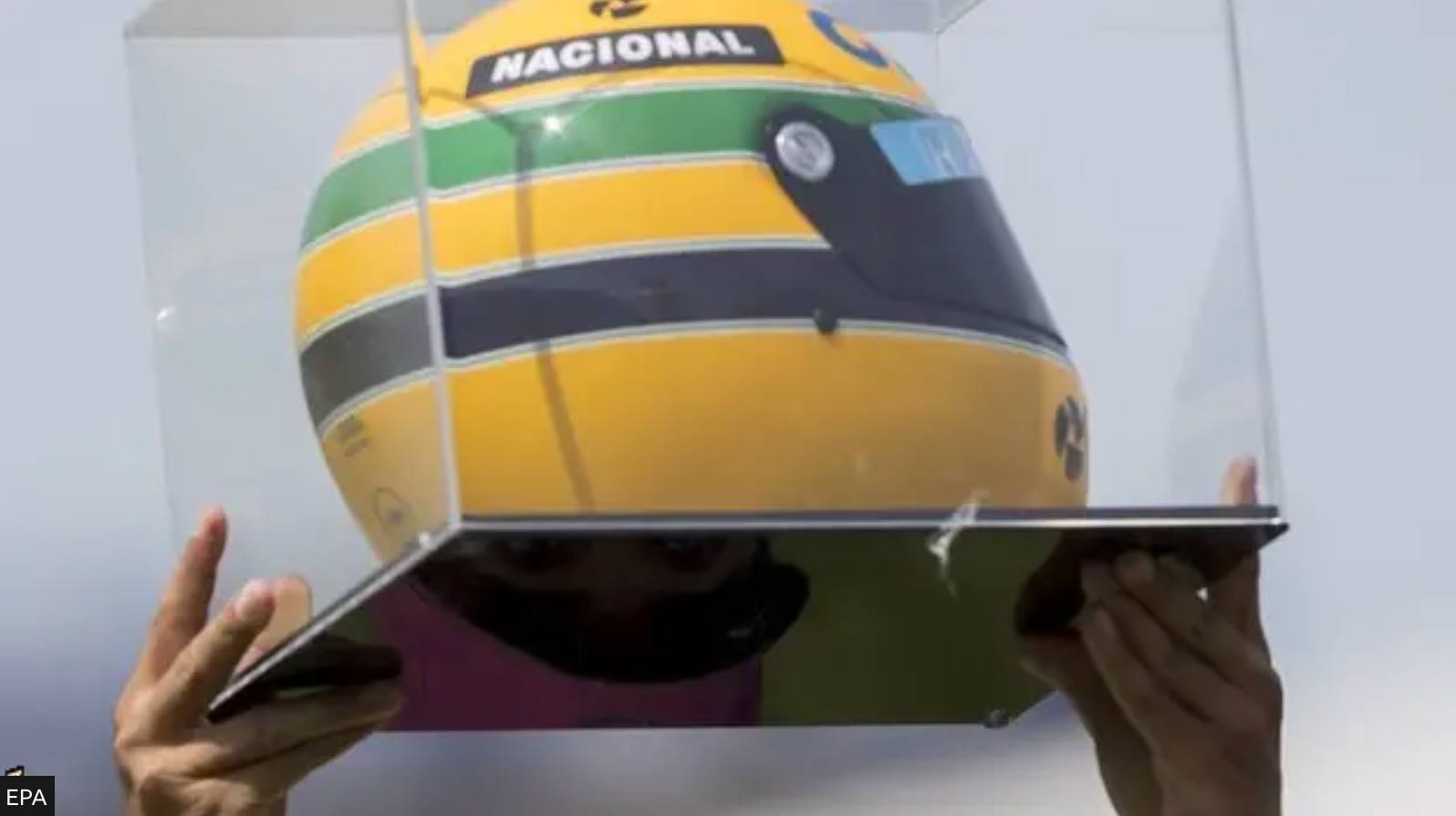
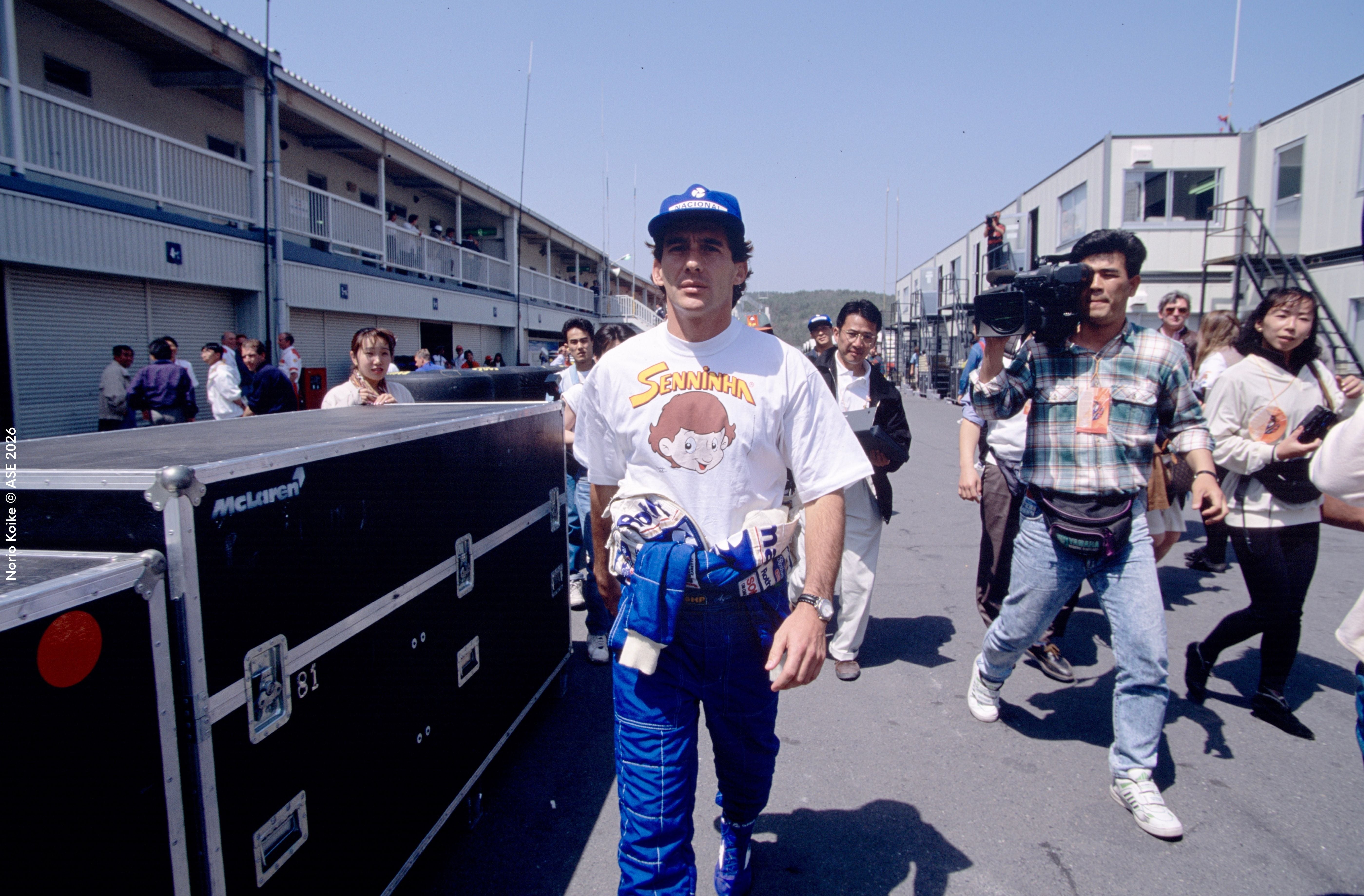
For more than three decades, Ayrton Senna has remained one of the most admired and influential figures in world sport.
In late 2024, Netflix released a six-part dramatisation of his life, introducing a new generation to the story of the three-time Formula 1 World Champion. The series surpassed 37 million watch hours in its first two weeks and topped non-English language charts around the world. For many viewers, it provided a first glimpse into the life, talent and character of a man whose impact extends far beyond the racetrack, yet Senna's legacy never needed rediscovering. Since his passing at Imola in 1994, he has remained a constant presence within Formula 1, Brazilian culture and global sport. His achievements continue to be celebrated by fans, drivers and teams, while the work of the Ayrton Senna Institute ensures his influence extends well beyond motorsport.
Today, there are two audiences engaging with his story. One remembers the yellow helmet, the championship battles and the scenes that unfolded in São Paulo following his passing. The other has discovered Senna through documentaries, streaming platforms, social media and a new generation of storytelling. What's remarkable is not that people are discovering Ayrton Senna in 2025. It's that, more than 30 years after his final race, people from entirely different generations continue to arrive at the same conclusion: This person mattered. And he still does.
He Was Brilliant in a Way That Was Impossible to Ignore

There's a version of Ayrton Senna's story that can be told through statistics alone.
Three Formula 1 World Championships in 1988, 1990 and 1991. Forty-one Grand Prix victories. Sixty-five pole positions, a record at the time. Six victories on the streets of Monaco, still regarded as one of the sport's greatest achievements. Those numbers place Senna firmly among the greatest drivers in Formula 1 history, but they don't fully explain why people who have never attended a Grand Prix still feel something when they watch him drive.
What set Senna apart was that his speed was visible. You didn't need timing screens, telemetry or data analysis to understand what you were seeing. His car appeared to move differently. It looked alive beneath him, balanced on the edge of control and operating at a limit few others could reach. Perhaps no moment illustrates this better than qualifying for the 1988 Monaco Grand Prix. Driving for McLaren, Senna was almost 1.5 seconds faster than his team-mate Alain Prost in identical machinery. Prost was not simply another competitor; he was a future four-time World Champion and one of the finest drivers of his generation. The gap was so extraordinary that Senna later described the experience as almost transcendent, saying he felt he had entered a state beyond conscious thought.
Wet weather only amplified his reputation. Nicknamed "The Rain Master", Senna seemed capable of finding grip and speed where others found only uncertainty. One of the most famous examples came at the 1993 European Grand Prix at Donington Park. Starting fifth on the grid, he passed four cars on the opening lap, including both Williams drivers, Alain Prost and Damon Hill, in conditions so difficult that many competitors were simply trying to keep their cars on the circuit.
His driving style was equally distinctive. The rapid modulation of the throttle, the precise corrections and the constant search for grip produced a driving style unlike anything else on the grid. Engineers and team personnel often spoke of the contrast visible in his onboard footage. The car appeared to be operating on the ragged edge, constantly moving beneath him, while Senna himself remained remarkably calm and composed inside the cockpit.
That contradiction fascinated people. Ayrton Senna was not only fast in a statistical sense. He was fast in a way that people could see, hear and feel. Decades later, that remains one of the reasons his performances continue to captivate motorsport fans around the world.
He Was a Human, Not a Machine
Formula 1 in the late 1980s and early 1990s often celebrated control. Drivers were expected to remain composed under pressure, measured in public and restrained in victory or defeat.
Ayrton Senna was different. He celebrated openly. He carried disappointment visibly. He spoke candidly about his beliefs, his motivations and the responsibilities he felt as both a racing driver and a public figure. At a time when many athletes carefully guarded their emotions, Senna rarely hid his.
That authenticity resonated with people far beyond motorsport. Whether watching old race footage, reading his interviews or discovering his story for the first time, fans are often struck by how deeply he cared. He cared about winning, certainly, but he also cared about fairness, responsibility and the impact he could have on others. You can hear it in his interviews, see it in his reactions after races and recognise it in the sincerity with which he approached every aspect of his life.
Unlike many public figures, Senna rarely appeared to be performing for the cameras. His emotions felt genuine because they were. Perhaps the most powerful example came during the 1992 Belgian Grand Prix weekend at Spa-Francorchamps. During practice, French driver Érik Comas suffered a heavy accident and was left unconscious in his car. Arriving at the scene before many of the marshals, Senna stopped his own car, ran to assist and helped stabilise Comas until medical personnel arrived.
It was an act of instinct rather than obligation. There were no social media platforms, no cameras seeking viral moments and no public relations benefit to be gained. A fellow driver needed help, and Senna acted without hesitation.
Stories like these have become an important part of his legacy. His deep personal faith, strong sense of responsibility and genuine concern for others created a public image that felt sincere rather than manufactured. Decades later, in an era where audiences increasingly value authenticity, those qualities remain just as compelling as his achievements behind the wheel.
Ayrton Senna was one of the greatest racing drivers the world has ever seen. But for many people, it was his humanity that made him unforgettable.

The Rivalry That Made Him
Every sporting legend needs a worthy rival, and Ayrton Senna found his in Alain Prost.
Their rivalry remains one of the most compelling in the history of sport, not simply because of the championships they contested, but because they approached the challenge of racing in such different ways.
Prost earned the nickname "The Professor" through his methodical approach to racing. He was calculated, strategic and renowned for extracting the maximum result from every situation. Senna, meanwhile, appeared to thrive on instinct, intensity and an unwavering belief in his ability to find speed where others could not. Together, they created a rivalry that captivated Formula 1 and elevated the sport to new audiences around the world.
Their clashes at the 1989 and 1990 Japanese Grands Prix remain among the most discussed moments in motorsport history. Both incidents played a decisive role in the World Championship battle and sparked debates that continue decades later. Fans chose sides, arguments endured long after the chequered flag, and Formula 1 gained a level of drama that transcended the sport itself.
Great sporting stories require tension, and few rivalries have generated more than Senna and Prost. Yet what makes their story truly enduring is not the controversy, but the respect that ultimately emerged from it. Behind the headlines and the championship battles were two extraordinary competitors who continually pushed one another to higher levels of performance. Their rivalry helped define an era of Formula 1 and produced some of the greatest racing the sport has ever witnessed. In the years before Senna's passing, the relationship between the two men began to evolve. The hostility that had characterised much of their rivalry gave way to a growing mutual understanding and respect. Prost would later serve as a pallbearer at Senna's funeral, a powerful reminder that even the fiercest sporting rivalries can be built upon admiration.
Today, the Senna-Prost rivalry remains one of Formula 1's defining stories. Not because it was simple, but because it wasn't. It was competitive, emotional, controversial and deeply human. And like the legacy of Ayrton Senna himself, it continues to resonate with new generations of fans around the world.
What He Meant Beyond the Racetrack
For many people, Ayrton Senna's greatest legacy extends far beyond Formula1.
While his achievements on the track were celebrated around the world, much of his charitable work remained largely private during his lifetime. Friends, family and colleagues would later reveal a man deeply committed to helping disadvantaged children and families throughout Brazil, often without publicity or recognition. Those closest to him frequently spoke of a side of Senna that the public rarely saw. Away from the intensity of race weekends, he was thoughtful, generous and deeply aware of the responsibilities that came with his success.
Following his passing in 1994, his sister Viviane Senna established the Instituto Ayrton Senna to continue the work and values that had been important to him throughout his life. Since then, the organisation has helped millions of children and young people across Brazil through education-focused programmes designed to create greater opportunities for future generations. His influence on Brazil itself was equally profound.
During a period of significant economic and social challenges, Senna became a source of national pride. On race weekends, entire communities would gather around televisions to watch him compete. His victories transcended sport, providing moments of celebration and unity for a country that saw one of its own performing on the world stage at the highest level. When Senna passed away in May 1994, the response was extraordinary. Millions of people lined the streets of São Paulo to pay their respects, while tributes arrived from every corner of the globe. The grief was not limited to Formula 1 fans. It was felt by people who admired what he represented: excellence, determination, generosity and hope.
Today, statues, memorials and tributes to Senna can be found across Brazil, Europe and Japan. More than three decades after his final race, his image and legacy remain instantly recognisable to millions of people around the world. His impact can also be measured in another way.
The events of the 1994 Formula1 season became a catalyst for some of the most significant safety reforms in the sport's history. Advances in circuit design, cockpit protection, medical response and vehicle construction have dramatically improved driver safety in the decades since. Modern Formula 1 drivers regularly walk away from accidents that would once have had far more serious consequences. While those improvements resulted from the efforts of many engineers, officials and safety experts, the lessons learned in 1994 played a pivotal role in accelerating change.
That is why Ayrton Senna's legacy continues to resonate so strongly today.
He is remembered not only as one of the fastest racing drivers who ever lived, but as a man whose influence extended far beyond the cockpit. Through education, inspiration and the lasting changes his sport embraced after his passing, his impact continues to be felt by generations who never had the opportunity to watch him race.
Why a New Generation Found Him

Perhaps the most remarkable part of Ayrton Senna's story is that it continues to resonate with people who never had the opportunity to watch him race. More than three decades after his final Grand Prix, new fans are still discovering his achievements, his values and his enduring influence on Formula 1. Some encounter his story through documentaries or streaming platforms. Others find him through race footage shared online, Formula 1 history content, books, podcasts or conversations with family and friends who grew up watching him compete.
The pathways may have changed, but the destination remains the same. What continues to attract people to Senna is not nostalgia alone. It is the timeless nature of his story. Extraordinary talent, unwavering determination, fierce competitiveness and a deep sense of purpose remain qualities that resonate across generations, regardless of when someone was born.
Today, Ayrton Senna's influence extends well beyond motorsport. Through Senna Brands and a growing network of global partnerships, his legacy reaches audiences through fashion, lifestyle, gaming, education and popular culture. The Senna name is represented in more than 70 countries and continues to inspire new audiences around the world, demonstrating that his impact is as relevant today as it was during his racing career.
That continued appeal reflects something deeper than sporting achievement. Modern audiences are drawn to authenticity. They admire individuals who stand for something meaningful and whose actions reflect their values. Senna's legacy endures because people can see those qualities throughout his life and career. He was intensely competitive, occasionally controversial, deeply principled and unapologetically himself.
Like Muhammad Ali, Michael Jordan and other transcendent sporting figures, Senna ultimately became larger than the sport that made him famous. His story has also benefited from renewed interest through documentaries, books, films and modern storytelling. As with any historical figure of significance, these interpretations are often debated and discussed by fans, historians and those who knew him personally. That ongoing conversation is not a weakness of his legacy; it is a reflection of its importance.
The most enduring stories are rarely simple. More than thirty years after his passing, Ayrton Senna continues to inspire discussion, admiration and discovery around the world. New generations may encounter his story in different ways, but they often arrive at the same conclusion as those who watched him race in real time:
Few athletes have left a mark quite like his.
Carrying It Forward
So why does the world still love Ayrton Senna?
It's not simply the championships, although those remain among the greatest achievements in Formula 1 history. And it's not solely the tragedy of Imola, despite the profound impact it had on motorsport and millions of fans around the world.
It's because Senna represented something bigger than success. He showed people what complete commitment looked like. Commitment to excellence, to principle and to the pursuit of becoming the very best version of yourself. He competed with extraordinary intensity, cared deeply about those around him and remained unapologetically authentic in a world that often rewards carefully managed public personas.
His influence continues to be felt today. Through the work of the Ayrton Senna Institute, millions of young people have benefited from educational programmes designed to create opportunities and transform lives. More than three decades after his passing, his legacy continues to deliver meaningful and measurable impact. That is why new generations continue to discover him, and why those who have admired him for decades remain connected to his story.
For many fans, that connection extends beyond memories, photographs or race results. It becomes a way of carrying forward the values that made Ayrton Senna such an enduring figure in world sport. The Senna Collection exists to celebrate those values and the legacy behind them. It is a tribute to one of the most admired athletes of all time, created for those who continue to be inspired by his story, his achievements and the lasting impact he made on the world.
Because some legacies are measured in championships.
The greatest ones are measured in the lives they continue to influence.